

Can I Use Existing Floor Plans for a Permit?
Many homeowners and property owners already have floor plans from a previous project, real estate listing, or older construction documents. When it is time to apply for a building permit, one of the first questions that comes up is whether those existing floor plans can be reused. People often want to avoid the cost and time of creating new drawings if what they already have seems accurate.
The short answer is that sometimes existing floor plans can be used for a permit, but not always. City building departments have specific requirements, and not all floor plans meet those standards. The decision depends on accuracy, completeness, project scope, and local permit rules.
This guide explains everything in clear and simple language. You will learn when existing floor plans are accepted, when they must be updated, what cities look for during review, and how to avoid permit delays. By the end, you will know whether your current floor plans are usable or if revisions are needed before submitting your permit application.
What Are Floor Plans and Why Cities Require Them
Floor plans are scaled drawings that show the layout of a building from a top view. They include walls, doors, windows, room labels, dimensions, and sometimes fixtures or equipment. Cities require floor plans to understand how a space is arranged and how it will be used.
During permit review, officials use floor plans to check for building code compliance, safety standards, and zoning rules. They want to confirm that rooms meet minimum size requirements, exits are properly placed, and changes do not affect structural or safety elements.
Because floor plans are a key part of permit approval, cities focus on whether the drawings clearly and accurately represent the current or proposed layout of the building.
What Counts as Existing Floor Plans
Existing floor plans can come from many sources. Some homeowners receive them when they purchase a property. Others may have plans from a previous remodel or an architect who worked on the home years ago. Floor plans may also be part of old permit records or builder documents.
These plans might be digital or printed, detailed or very basic. Some may show exact dimensions, while others are more conceptual. The source and quality of the plans play a major role in whether they can be reused for a permit.
Cities do not automatically reject existing floor plans, but they do evaluate whether those plans meet current permit standards.
Can Existing Floor Plans Be Used for a Permit
Yes, existing floor plans can sometimes be used for a permit, but only if they meet specific criteria. The most important factor is whether the plans accurately reflect the current condition of the building and the scope of the proposed work.
If the floor plans are clear, scaled correctly, and show all required information, many cities will accept them. However, if the plans are outdated, incomplete, or do not match what is actually built, the city will likely request revisions.
Using existing floor plans is more common for minor projects, such as interior remodels that do not affect structural elements. Larger or more complex projects often require updated drawings.
When Existing Floor Plans Are Usually Accepted
Existing floor plans are more likely to be accepted when the building layout has not changed since the plans were created. This includes cases where the property was recently built or previously permitted.
Cities may accept existing plans for projects like interior renovations, non structural changes, or simple layout updates. If the work does not impact exits, load bearing walls, or occupancy type, existing floor plans may be sufficient.
Another key factor is clarity. Plans that are easy to read, properly labeled, and drawn to scale have a much better chance of approval.
Situations Where Existing Floor Plans Are Not Accepted
There are many situations where existing floor plans are not enough. If the plans are old and the building has changed over time, the drawings may no longer represent reality. This creates a problem for permit reviewers.
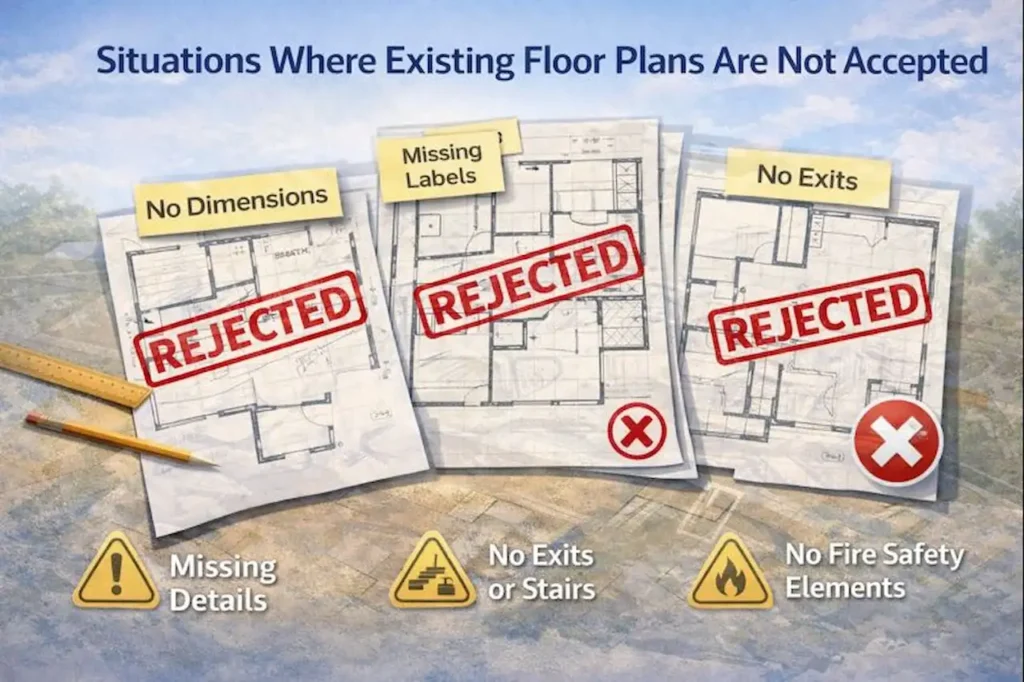
Cities often reject floor plans that are missing dimensions, room labels, or required notes. Hand drawn sketches without scale are also commonly rejected. Plans that do not show exits, stairways, or fire safety elements may not meet code requirements.
If the project involves structural changes, additions, or changes to occupancy use, cities usually require updated floor plans that reflect the proposed work in detail.
How Accurate Do Floor Plans Need to Be for Permits
Accuracy is critical when submitting floor plans for a permit. Cities expect drawings to match the actual layout of the building as closely as possible. This includes wall locations, room sizes, and door and window placement.
Minor measurement differences may be acceptable, but major discrepancies can lead to rejection or requests for revisions. If inspectors find that the built space does not match the submitted plans, it can cause delays or require resubmission.
Using verified measurements and professional drafting methods helps ensure the plans meet accuracy expectations.
City Permit Requirements for Floor Plans
Each city has its own permit requirements, but most follow similar principles. Floor plans usually must be drawn to scale, include room labels, show dimensions, and identify existing and proposed changes.
Some cities require separate plans for existing conditions and proposed layouts. Others allow both to be shown on the same drawing if clearly labeled. Notes explaining the scope of work are often required.
Understanding local requirements before submission helps determine whether existing floor plans are usable or need updates.
Common Reasons Cities Reject Existing Floor Plans
One common reason for rejection is outdated information. If the plans do not reflect current conditions, permit reviewers cannot rely on them. Missing details are another frequent issue.
Poor readability can also cause problems. Floor plans that are blurry, poorly scanned, or cluttered may be rejected even if the information is technically correct. Cities need clear drawings that are easy to review.
Another issue is code compliance. Plans created years ago may not meet current building codes, especially if regulations have changed.
Updating Existing Floor Plans for Permit Approval
In many cases, existing floor plans can be updated instead of completely redrawn. This is often a cost effective solution. Updates may include adding dimensions, labeling rooms, correcting layouts, or showing proposed changes.
Professionally updating floor plans ensures they meet current permit standards while preserving the original layout where possible. This approach is common for remodel permits and tenant improvements.
Updated floor plans help avoid delays and reduce the chances of rejection during city review.
Floor Plans for Remodel and Renovation Permits
Remodel and renovation permits often require floor plans that clearly show before and after conditions. Cities want to understand what is changing and how it affects the building.
Existing floor plans can sometimes be used as a base, but they usually need modifications to show proposed work. Walls to be removed, new rooms, or layout changes must be clearly identified.
Clear documentation helps reviewers quickly understand the project and speeds up approval.
Residential vs Commercial Floor Plan Requirements
Residential and commercial permits often have different requirements. Residential floor plans usually focus on room layout, exits, and basic safety elements. Commercial plans may require additional details such as occupancy load, accessibility features, and fire rated walls.
Existing residential floor plans are more commonly accepted for permits than commercial ones. Commercial projects often require updated drawings due to stricter code requirements.
Knowing which category your project falls into helps determine whether existing floor plans are suitable.
Using Hand Drawn or Real Estate Floor Plans
Hand drawn floor plans or real estate listing diagrams are often not accepted for permits. These drawings are usually not to scale and lack required details.
While they may be useful for reference, cities generally require professionally prepared drawings for permit review. Using these types of plans without updates often leads to rejection.
Converting basic sketches into permit ready floor plans is a common solution.
Digital Floor Plans and Online Drafting Services
Digital floor plans created or updated online are widely accepted by cities when they meet permit requirements. These plans are easy to revise and submit electronically.
Online drafting services can take existing plans and update them to meet city standards. This approach saves time and avoids the need for in person visits in many cases.
Digital plans also make it easier to respond to city comments and resubmit revised drawings quickly.
How Inspectors Use Floor Plans During Construction
Approved floor plans are not only used during permit review. Inspectors reference them during site inspections to verify that construction matches what was approved.
If the built work differs significantly from the submitted plans, it can lead to inspection failures or additional requirements. Accurate floor plans help avoid these issues.
Using updated and accurate drawings protects you throughout the entire permit and construction process.
How to Know If Your Existing Floor Plans Are Acceptable
The best way to know is to review your city’s permit checklist or consult with a professional drafting service. They can quickly assess whether your existing plans meet current requirements.
Factors include project scope, plan accuracy, and local rules. A quick review can save time and prevent permit delays.
Taking this step early helps you choose the right approach before submitting your application.
Conclusion
Using existing floor plans for a permit is possible in some situations, but it depends on how accurate and complete those plans are. Cities review floor plans to make sure they reflect the current condition of the building and clearly show the proposed work. If the drawings are outdated, missing details, or unclear, they are likely to be rejected.
For small remodels or interior changes, existing floor plans may work if they are updated to meet current permit requirements. For larger projects or commercial properties, cities often require revised or newly prepared drawings. Understanding your city’s expectations before submitting your permit can save time and prevent delays.
Taking the time to verify and update your floor plans ensures a smoother permit process and helps your project move forward without unnecessary complications.
Why Choose Us
We help homeowners, contractors, and business owners prepare floor plans that meet city permit requirements. Our team reviews existing drawings carefully to determine whether they can be used as is or need updates for approval.
We focus on accuracy, clarity, and compliance with local building codes. By updating floor plans using reliable data and professional drafting standards, we help reduce permit rejections and revision requests.
Our process is simple and efficient. We communicate clearly, work quickly, and provide permit ready floor plans that are easy for city reviewers to understand. If existing plans are not acceptable, we explain why and guide you toward the right solution without unnecessary steps.
Frequently Asked Questions
Can I submit old floor plans for a building permit
Yes, but only if the plans accurately show the current layout and meet city permit requirements. Outdated plans often need revisions.
Do floor plans need to be drawn to scale for permits
Yes. Most cities require floor plans to be drawn to scale so reviewers can verify dimensions and layout accurately.
Will the city accept hand drawn floor plans
In most cases, no. Hand drawn plans are usually not accepted unless they are clear, scaled correctly, and include all required details.
Can existing floor plans be updated instead of redrawn
Yes. Updating existing floor plans is common and often more cost effective than creating new drawings from scratch.
Are floor plans required for all permits
Not all permits require floor plans, but most building and remodel permits do. Requirements vary by city and project type.
What happens if my floor plans are rejected
The city will usually request revisions. Updated digital floor plans can be corrected and resubmitted without restarting the entire permit process.