

Floor Plans: Mistakes, Trends, and Permit Success
The Unsung Hero of Every Successful Project
Why does every U.S. homeowner and realtor need accurate floor plans? Because a professional floor plan is the single most valuable tool for realizing a home’s full potential, securing permits, and maximizing market value. It is the language of construction.
Whether you are launching a new development, planning a remodel, or preparing a listing, the floor plan dictates success or failure. At Pro Site Plans, we provide the precision needed to turn your vision into a reality without the costly drama.
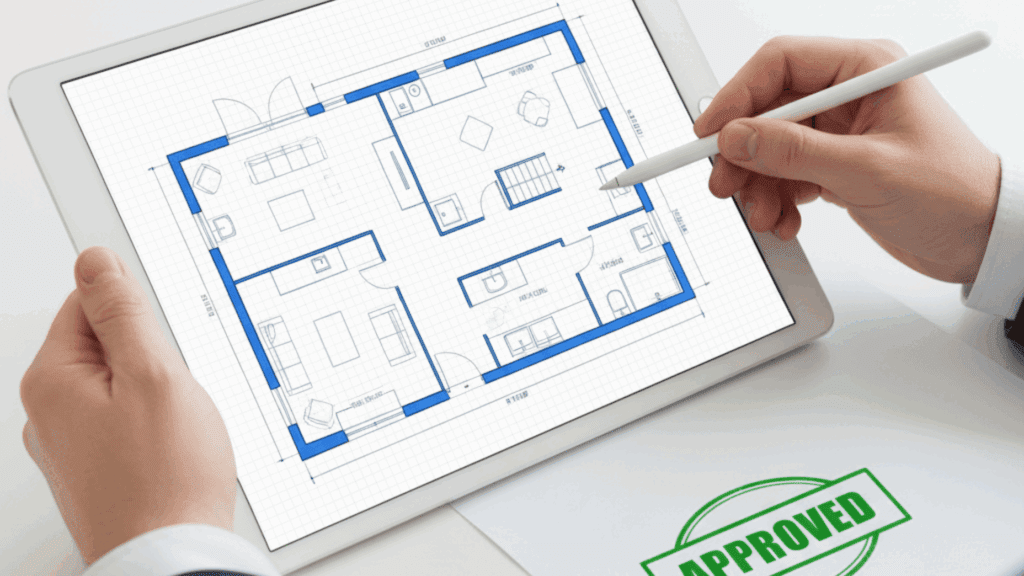
The Problem: The High Cost of an Amateur Plan
Ignoring the necessity of a professionally drafted floor plan leads directly to expensive setbacks—time lost that you can never recover.
1. Permit Paralysis (Delays in Permits)
City and county officials across the country have zero tolerance for inaccurate plans. If your floor plan lacks necessary dimensions, fails to define egress (emergency exit) paths, or is inconsistent with local building codes (like those in California or Florida—see our specific regional guides like Site Plan for Permit in California or Site Plan for Permit in Florida), your application is dead on arrival. This halts your project indefinitely.
2. Builder Backlash (Miscommunication and Errors)
Ambiguous or poorly drafted plans are the #1 cause of change orders on a job site. When dimensions are wrong, builders have to stop, ask questions, and re-frame. This leads to wasted materials, expensive fixes, and rapidly extending the construction timeline.
3. Market Mediocrity (Low Real Estate Appeal)
In today’s digital real estate market, buyers are sophisticated. A missing or unprofessional floor plan makes it difficult for potential buyers to visualize the space. It forces them to guess the room size or layout, often resulting in lower engagement and slower sales. Check our Reviews to see how clarity drives confidence.
The Solution: Precision Drafting from Pro Site Plans
Professional floor plan drafting solves these problems by providing a clear, scaled, and compliant diagram of the structure. Our plans act as the ultimate communication tool, ensuring your finished product matches the architectural vision and, crucially, that the local authority signs off on the design quickly.
1. Floor Plan Fundamentals: The Non-Negotiable Requirements
A floor plan is a scaled diagram of a structure viewed from above, created as if the building were sliced four feet off the ground. For it to be a legal, permit-ready document, it must include:
| Component | Description | Why It’s Critical |
| Dimensions | Linear measurements for the length/width of every element (walls, rooms, openings). | The single most important factor for permits and accurate construction. |
| Walls | Clearly defined thickness, with labels identifying load-bearing walls for structural changes. | Defines room boundaries and structural integrity. |
| Doors & Windows | Standard symbols showing type, size, and swing direction. | Ensures compliance with light, ventilation, and emergency egress codes. |
| Fixtures | Symbols for permanent elements (toilets, sinks, appliances). | Required for planning plumbing, electrical, and HVAC systems. |
| Scale & Orientation | A clear ratio (e.g., 1/4″ = 1′) and a North Arrow for site context. | Guarantees accurate measurement and placement. |
Understanding Scale: A common residential scale is 1/4″ = 1′, meaning a quarter-inch on the drawing represents one foot in the building. As experts, we caution you: Always rely on the written dimensions, not what you measure with a ruler, as the written number is the legally required size.
2. Decoding Mistakes and Embracing Modern Layouts
Our experience has highlighted common pitfalls that halt projects and modern trends that drive market value.
Top 3 Mistakes That Kill Your Permit Application

- Missing Egress Compliance
Failure to prove your plans meet minimum window and door size requirements for emergency escape from bedrooms and basements is an instant rejection. - Inconsistent Measurements
A plan where the interior room dimensions don’t precisely add up to the total exterior dimensions is flagged as fundamentally inaccurate. - Undocumented Structural Changes
Removing a load-bearing wall without providing the necessary calculations and details for the replacement beam/header is a major code violation. If your project involves interior changes, you may need to start with an As-Built Plan first.
Modern Design Trends Driving Floor Plan Demand
Today’s buyers value openness and flexibility. Ensure your plan reflects current market demands:
- Open-Concept Living
Merging the kitchen, dining, and living areas. This structural change requires detailed planning for load-bearing wall removal and beam installation, but it’s what the market wants: 64% of U.S. homebuyers prefer open floor plans. - Flex Rooms
Dedicated, quiet spaces for remote work or fitness are essential. Modern plans use pocket doors or sliding partitions to allow rooms to adapt their function as needed. - Indoor-Outdoor Flow
Using large, seamless glass doors to connect the interior with covered patios/decks maximizes usable living space, a must-have in many U.S. climates.
Frequently Asked Questions (FAQs)
Find quick answers to the most-searched questions about floor plan drafting. For detailed information on all our offerings, visit our FAQ page.
| Question | Pro Site Plans Answer |
| How much does a floor plan cost? | Our professional floor plan drafting typically costs $79 per floor, offering significant savings over traditional surveyors. See all options on our Plans and Pricing page. |
| How fast is the turnaround? | Most permit-ready plans are delivered in 48 hours or less, with rush options available. |
| What’s the difference between a floor plan and an “as-built” plan? | A floor plan is your proposed design; an as-built plan shows the existing structure and is required before major renovation work. We offer both services. |
| How do you draft without an on-site visit? | We use your sketches, photos, and public records, combining them with high-resolution satellite and GIS data to produce a new, precise plan. |
| What if the city rejects the plan? | We offer unlimited, free revisions until the plan meets local code and secures your permit approval. This is our guarantee. |
| What digital formats do I receive? | You receive a high-resolution, print-ready PDF file. DWG or other CAD files are available with upgraded packages. |
| Do you provide structural engineering stamps? | No. We provide detailed drafting. For structural changes (e.g., removing a load-bearing wall), you must consult a local structural engineer for the required stamp. |
| Do I need a floor plan for a building permit? | Yes, nearly all municipalities require one for projects that alter interior layouts, add rooms, or change fixture locations. |
| How do floor plans help realtors sell a home faster? | They are the #1 requested feature after photos, building trust and allowing buyers to confidently plan furniture, which speeds up the decision process. |
| Do you service all 50 U.S. states? | Yes, our remote drafting model allows us to create compliant plans for clients nationwide. |
| Do you handle complex, custom requests? | Yes. For large projects or complex needs, you can submit details on our Custom Quote form. |
| Do you offer 3D renderings? | Yes, we offer 3D renderings as a separate service to bring your 2D plan to life for marketing or presentations. |
| Can you add furniture suggestions? | Yes, our plans include suggested furniture placement to enhance visualization for both the homeowner and the buyer. |
| Can you draft a plan from my sketch or an old blueprint? | Absolutely. We use your existing documents as a basis to create a new, professionally scaled, and dimensioned plan. |
| Can a floor plan be used for a condo or apartment? | Yes, they are essential for showing the scope of work and gaining approval from building management or an HOA. |
| What is a demolition plan? | It’s a specialized floor plan that explicitly marks which elements (walls, fixtures) are to be removed during a renovation. |
| Can I use the floor plan for interior design? | Yes. Interior designers rely on our accurately scaled plans to select furniture, verify layouts, and plan electrical changes. |
| What is a “Proposed” floor plan? | It shows a future design or renovation. It is the primary document required for the permit application to show the intended final state of the home. |
| Can you include square footage on the plan? | Yes, we include clear square footage measurements for each room and the total floor area. |
| Where can I learn more about ProSitePlans? | You can read more about our mission and expertise on our About ProSitePlans page. |
Related Articles
2025 Building Permit Cost Guide: What You’ll Pay & Why It Varies
City Permit Site Plan Requirements: What You Need in Every State