
Plot Plan for My Property: A Complete Homeowner’s Guide (2025 Edition)
In 2025, as cities tighten their permit requirements and more homeowners take on renovations, the question “How do I get a plot plan for my property?” is more relevant than ever. Whether you’re planning to build a fence, file for a permit, or simply understand your property boundaries before listing your home for sale, a plot plan is a critical document. Yet, most people don’t know where to start. This guide simplifies the process—explaining what a plot plan is, when you need one, and the best (and fastest) ways to get one, with expert advice along the way.
Introduction: Why You Might Need a Plot Plan for Your Property
If you’ve ever searched for “plot plan for my property,” you’re not alone. Whether you’re building a fence, applying for a permit, or just want to understand your land boundaries, a plot plan is essential. This guide will walk you through everything you need to know in 2025 to get one—easily, affordably, and accurately.
What Is a Plot Plan?
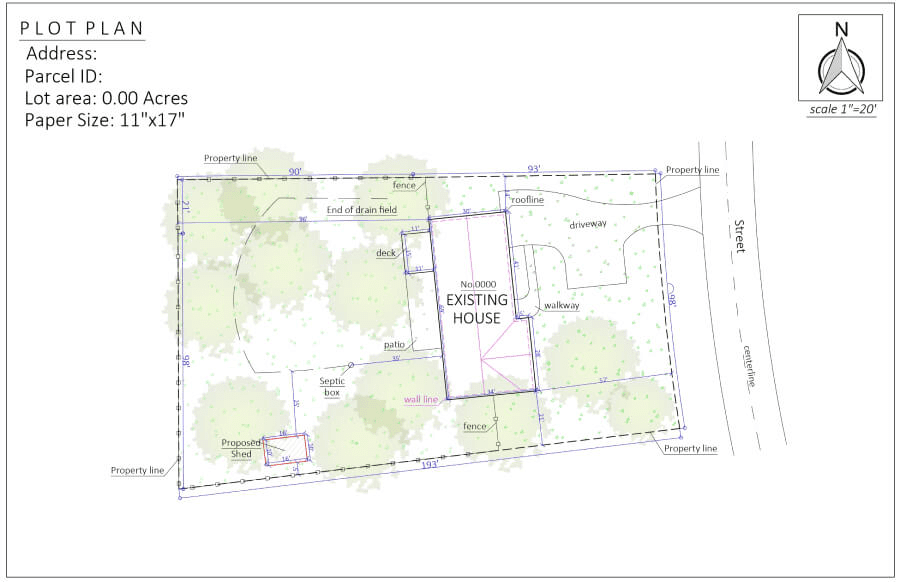
A plot plan—also known as a property layout or parcel map—is a scaled, top-down drawing of your property that outlines key physical features. It’s often the first document needed when applying for construction permits, planning renovations, or resolving disputes over land boundaries.
Typically, a plot plan includes:
- Property lines and dimensions
- Setback lines (the legal minimum distance from property boundaries to any structures)
- Building footprints (your house, garage, ADUs, sheds, etc.)
- Easements (shared driveways, utility access, etc.)
- Utilities, driveways, and fences
If you’re asking, “What does a plot plan of my property look like?”—imagine a blueprint-style drawing that helps city officials, contractors, and homeowners understand where things are located on your lot.
Important: A plot plan is not the same as a site plan. While a plot plan is usually used for informational or general planning purposes, a site plan is more detailed, often showing grading, topography, and other construction elements required by permit authorities.
Need a plot plan that meets your city’s building department requirements? Check out our Site Plan Services for permit-ready drawings designed to pass approval.
When Do You Need a Plot Plan?
Plot plans aren’t just useful—they’re often required. Here are the most common situations when you’ll need one:
- Home additions or remodeling projects: Cities often request a plot plan when you’re adding a new room, garage, deck, or ADU.
- Installing exterior features: Whether it’s a fence, swimming pool, shed, or patio cover, many permits require a scaled site layout.
- Obtaining a zoning, variance, or building permit: Building departments need to confirm that your project complies with local regulations.
- Buying or selling a home: Real estate agents and buyers may request a property map for better understanding of land boundaries.
- Appealing property taxes or resolving disputes: If there are discrepancies in land assessments or neighbor conflicts, plot plans provide documented clarity.
Each city and county may have different plot plan requirements. Always check with your local building department, planning office, or county GIS portal before starting a project.
How to Get a Plot Plan for Your Property (Free & Paid Options)
Getting a plot plan doesn’t have to be difficult—but the method you choose depends on how accurate and official it needs to be. Whether you’re preparing for a permit application, property sale, or home improvement project, here are the top five ways to obtain a reliable plot plan:
1. Check Local Public Records and GIS Systems (Free Option)
Start with your city or county assessor’s office or local building department. Many jurisdictions provide property parcel data online, including basic plot plans.
- Use your address or parcel number to search.
- Some counties offer GIS (Geographic Information Systems) with downloadable plot outlines.
| Pros | Cons |
|---|---|
| Free access | Not always detailed or permit-ready |
| Instant availability | Often outdated or limited to parcel outlines |
2. Ask Your Title Company or Mortgage Lender
If you recently closed on your property, check your title documents or closing package—these sometimes include a survey sketch or basic plot plan used during the transaction.
Tip: Look for the “plat map” or “property boundary diagram” in your closing documents.
| Pros | Cons |
|---|---|
| Already paid for (included in closing docs) | May be low-resolution or missing key features |
| May include dimensions and structure layout | Rarely accepted for construction or zoning permit approvals |
3. Hire a Professional Drafting or Site Plan Service
If you need a permit-grade plot plan, especially for additions, fencing, or new structures, hiring a professional is the safest route.
Companies like ProSitePlans offer:
- Basic Plot Plans for informational or planning use
- Permit-Ready Site Plans (with setbacks, dimensions, and grading if needed)
- Subdivision or Custom Layouts
You can even request a custom quote for complex zoning or multi-lot projects.
| Pros | Cons |
|---|---|
| Fast, accurate, and digital-ready | Paid service (but worth it for accuracy) |
| Accepted by most U.S. building and zoning departments | |
| Affordable compared to hiring a licensed land surveyor |
4. Reuse an Existing Survey or Plat Map (If Available)
If your property has been surveyed in the past—such as during refinancing or development—you may already have a usable ALTA, boundary, or topographic survey.
These includ
- Certified measurements
- Elevation data
- Easement markings
Important: Always confirm whether your jurisdiction accepts it before using for permitting.
| Pros | Cons |
|---|---|
| Legally certified | May be outdated if property changes occurred |
| High accuracy | Expensive to update or revalidate for new permits |
5. Draw One Yourself (For Personal or Conceptual Use Only)
For planning-only purposes (not for permit submission), you can create your own sketch:
- Use graph paper or free software like SketchUp or SmartDraw
- Base your sketch on parcel data from tax records or GIS
Important Note: DIY plot plans are rarely accepted by cities or counties for official use. They’re best for conceptual planning or sharing ideas with contractors.
| Pros | Cons |
|---|---|
| Free and fast | Not legally recognized by building departments |
| Good for brainstorming layout ideas | No guarantee of accuracy or compliance |
What’s the Difference Between a Plot Plan and a Site Plan?
| Feature | Plot Plan | Site Plan |
|---|---|---|
| Purpose | Informational/General Use | For permits and construction approvals |
| Includes Structures | Yes | Yes |
| Topography | No | Often required |
| Accuracy | Basic | Precise (often by licensed drafter) |
See full comparison on our Site Plan vs Floor Plan guide.
How Much Does a Plot Plan Cost?
| Option | Cost Range |
| From City Records | Free |
| DIY (graph paper/tools) | Free |
| From Title Company | $0–$100 |
| Online Drafting Services | $129–$299+ |
| Surveyor (licensed) | $500–$1,500 |
Common FAQs About Plot Plans
Q: How do I find a plot plan for my property?
A: Start with your local assessor’s office, title company, or county GIS portal.
Q: Can I get a free plot plan online?
A: In some counties, yes. But accuracy and acceptance vary.
Q: Is a plot plan the same as a survey?
A: No. A survey is legally certified and includes precise measurements.
Q: Can I use a plot plan to apply for a permit?
A: Sometimes. But most jurisdictions require a site plan instead.
Q: What if I can’t find my old plot plan?
A: You can order a new one from services like ProSitePlans.
Final Thoughts
Getting a plot plan doesn’t have to be complicated. Whether you’re improving your home, applying for a permit, or just want to know your property lines, having a plot plan is an essential first step.
For accurate, fast, and affordable plans that meet local requirements, trust ProSitePlans. We’ve helped thousands of homeowners across the U.S. get reliable plans ready for permitting, remodeling, and real estate.
